
At Torner Juncosa i Associats we offer a comprehensive Intellectual Property service to guarantee respect for the rights of our clients and maximise the value of their inventions.
More than 20 years of experience behind us with a team with extensive experience covering all technical areas.
At Torner Juncosa i Associats we offer a comprehensive Intellectual Property service to guarantee respect for the rights of our clients and maximise the value of their inventions.
More than 20 years of experience behind us with a team with extensive experience covering all technical areas.

Who we are
TJA was set up in 2003 by partners Jaume Juncosa, Elisabet Torner and Núria Torner, in collaboration with international partners Gabriele Gislon, Federica Trupiano and Andrea Marietti, from the MGT patent office in Milan, to offer a comprehensive consultancy service in industrial and intellectual property law with a highly technical approach.

What we do
TJA offers a comprehensive service in the field of industrial property and intellectual property, in any of its aspects: protection, technical assistance, legal assistance, as well as other services such as translations and training.
Our aim is to ensure that the industrial property rights of our clients are respected, that they can make the most of their inventions, and that they find a viable way to exploit their ideas in the event that their proposals are not patentable. Our vocation is to offer a quality service, with advice always provided by professionals with technical qualifications in the sectors in which we work, and with training and experience in the field of industrial property.
Patents and utility models
Patentability report
We conduct worldwide searches to identify relevant background information on a proposed invention and draft a patentability report, detailing the possibilities for protection and recommending the best protection strategy.
We consider this search to be an essential preliminary step in order to know the state of the art and to be able to establish the feasibility of protection.
Drafting, prosecution and defence of patents and utility models
We offer specialised services to protect your inventions through patents and utility models, ensuring that your innovations are adequately protected.
We prepare applications for European, Spanish and PCT patents, managing all the procedures until they are granted. We are also familiar with the requirements of the main patent offices in the world, including those of the United States, China, Japan and Korea.
Oppositions, appeals and legal defence of patents
We offer legal and technical consultancy services for the filing of claims for patent infringement, or for the defence against claims received from third parties, through the preparation of reports and expert opinions, in collaboration with patent attorneys.
Infringement risk report
We provide comprehensive analysis to determine whether a technology, whether product or process, risks infringing third-party rights.
We evaluate all related patents, preparing a report, to provide you with a clear and detailed overview of possible conflicts and how to minimise the risk of infringement.
Scope of protection report
We conduct a detailed analysis of competitors’ patents and related patents to accurately determine the scope of protection of your patent application.
We prepare a report describing the strengths and weaknesses of the background documents and advise on strategies to minimise or eliminate the risk of infringement.
Freedom to Operate (FTO) Report
We conduct exhaustive searches for patents in force in the countries of interest based on the detailed description of a product or process. Our objective is to ensure that there are no patent rights that would prevent its manufacture or commercialisation. This process includes a detailed search and analysis of any patents that could affect your operations.
This process is essential to ensure the viability of your product on the market and to avoid potential legal conflicts.
Technological surveillance
We offer technological surveillance services to keep you informed of patents filed by your competitors or in a specific sector. We provide our clients with regular listings of relevant patents, allowing them to keep up to date with technological developments and competitor activity.
Technical expertise
We offer technical expertise services to support legal claims. We draft comprehensive and accurate technical reports to support your case. Our patent agents act as expert witnesses, providing specialised assistance and support during the litigation process.
Establishment of pre-use rights
We offer the creation of time-stamped documents to establish a pre-use right, certifying the authorship of a product or process on a specific date. This right allows the product to be manufactured and marketed, even if a patent or industrial model is applied for at a later date.
The right of use does not offer the same level of protection as a patent or utility model and cannot be transferred individually, only with the assignment of the whole company. It is a defensive document that does not prevent others from producing or marketing the product.
Your content goes here. Edit or remove this text inline or in the module Content settings. You can also style every aspect of this content in the module Design settings and even apply custom CSS to this text in the module Advanced settings.
Industrial designs
We offer specialised services to protect the uniqueness of your industrial designs, i.e. to protect the external appearance of your product or part of it.
To do this, we searched various specialised databases to identify similar registered designs.
We take care of applying for and managing registration at the national, EU and international level.
We also handle oppositions and appeals and prepare reports to assess the validity or risk of infringement of third-party rights.
Background Searches
We carry out worldwide searches for industrial designs in specialized databases of European countries, OHIM and the United States, providing our clients with the results obtained.
The purpose of such searches may be to locate the designs of a specific company or individual, or to locate designs similar to a proposed design.
Preparation and Filing of Industrial Designs
We prepare and adapt the graphic information necessary for the filing of an industrial model and present it to the national offices of those countries where protection is required.
During the filing process, we handle responses to official communications until they are finally granted.
Infringement Risk Report
We analyze whether a product proposed by our clients is at risk of infringing an industry model of a competitor already known to our clients or located in a search, in order to determine precisely whether the proposed product falls within the scope of protection offered by the document(s) analyzed.
As a result of this analysis, we draft a report evaluating the risk of the proposed product or process infringing the document(s) studied and recommend strategies to minimize or eliminate that risk of infringement.
Scope of Protection Report
We conduct a detailed analysis of one or several industrial models of competitors in order to accurately determine the scope of protection offered.
As a result of this analysis, a report is drafted describing the strengths and weaknesses of the studied documents. In this report, we also advise on strategies to minimize or eliminate the risk of infringing these documents.
Freedom to Operate (FTO) Report
Based on a description of a proposed product, we conduct an exhaustive search for the industrial models in EU member countries or the USA for all relevant documents currently in force in the countries where operation is intended. This is done to determine with certainty that there are no documents in force in those countries that prevent the free manufacturing and/or commercialization of the proposed product.
This report requires very thorough search and analysis work.
Su título va aquí
Your content goes here. Edit or remove this text inline or in the module Content settings. You can also style every aspect of this content in the module Design settings and even apply custom CSS to this text in the module Advanced settings.
Trademarks
Trademarks protect a company’s corporate image, its identity, be it through its name, its logo, a slogan, or a combination of the above.
If you have any questions, please consult the Basic Concepts section, where the main concepts related to intellectual property are explained in a didactic way, or contact us to arrange a meeting.
Trademarks
We also offer specialised services to protect your company’s corporate identity, including your name, logo, slogan or any combination of these.
We conduct exhaustive trademark searches in specialised databases at the national, EU or global level, present the results to our clients and advise them on the best options for action.
We prepare and file trademark applications at national, EU and international levels.
We also carry out regular surveillance actions to detect trademarks similar to those of our clients and take preventive measures.
We file oppositions and appeals before the Spanish Patent and Trademark Office (OEPM) and the European Union Intellectual Property Office (EUIPO).
Legal Assistance
We offer Industrial Property Legal Services with a legal team made up of lawyers specialized in Industrial Property, with extensive experience in the defense, protection and management of rights before courts, national and international offices, and administrative bodies.
We provide comprehensive legal advice that combines technical depth, business strategy and legal precision.
Preventive Legal Advice and Legal Due Diligence
Stay ahead of risks and shield your innovation. We prevent conflicts through an exhaustive legal analysis of your Industrial Property assets. We evaluate potential risks, review key contracts, and design robust legal structures and strategies that ensure solid and lasting protection for your inventions, brands, and designs from the very beginning.
Drafting and Negotiation of Contracts
We prepare and negotiate all types of contracts related to Industrial Property:
- Licensing agreements for the use of trademarks, patents and designs
- Non-disclosure agreements (NDAs)
- Assignments of rights
- Coexistence and technological collaboration agreements
We ensure that each clause is clear, balanced and legally enforceable, protecting your interests
Legal Defense and Litigation
We protect your rights by acting strategically in judicial and administrative proceedings regarding:
- Infringement of trademark, patent or design rights
- Unfair competition and acts of imitation
- Opposition, nullity and revocation before the SPTO (Spanish Patent and Trademark Office), EUIPO and courts
- Customs procedures and precautionary measures
Through a strategic and combative approach, we aim to safeguard the economic value of your rights and assets against any challenge.
Conflict Management and Mediation
We offer effective solutions that seek to preserve your relationships because we understand that litigation is not always the best path.
We provide alternatives such as mediation and direct negotiation to resolve Industrial Property disputes. Our approach seeks an effective, discreet and constructive solution that allows you, whenever possible, to maintain your valuable business relationships.
Representation before Bodies and Courts
We directly represent our clients before the main authorities:
- The Spanish Patent and Trademark Office (SPTO)
- The European Union Intellectual Property Office (EUIPO)
- Civil, commercial and contentious-administrative courts
- International Organizations (WIPO, EPO)
Your case will always be in the hands of professionals with the authority and knowledge necessary to defend your interests where it matters most.
Audit and Legal Due Diligence
We perform legal audits of industrial property portfolios for investment, sale, mergers or international expansion processes.
We verify the legal status of your rights, licenses and registrations, reducing risks and ensuring legal transparency.
News
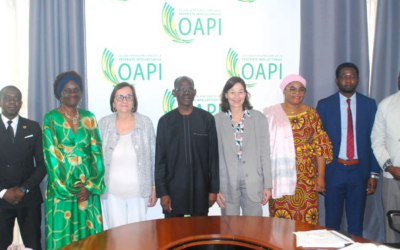
Visit the OAPI
Our trademarks team took part in a joint mission with our correspondents in Africa. As part of a delegation, we aimed to gain a better understanding of how the African Intellectual Property Office in Yaoundé operates. This was in response to our clients’ interest in...

Mr. Juncosa retires after more than 50 years of professional service
Mr. Juncosa, founder of Torner Juncosa y Asociados (TJA), is retiring after more than 50 years in the industrial property sector and more than 23 years at the helm of the firm. Throughout this time, he has developed a highly renowned professional career and, together...

First EUIPO Conference on Copyright
On 20 and 21 November, the European Union Intellectual Property Office (EUIPO) held its first conference dedicated to copyright. The event, organised in Alicante (Spain) and also accessible online, brought together experts, institutional representatives and...
Basic concepts
In order to make it easier to understand what a patent is and what it is for, and to answer your concerns, we have included various definitions, diagrams and explanations on all aspects relating to industrial property in this section.
What is a Patent
What is a Utility Model
What is an Industrial Design
What is a Trademark
European Patent
PCT Patent Application
What is a Patent
A patent is an exclusive right granted by a governmental authority to an inventor or a company for a specified period, usually 20 years from the filing date of the application. This exclusive right allows the patent holder to prevent others from making, using, selling or distributing the patented invention without his or her consent.
The grant of a patent is subject to certain requirements and patentability criteria, which may vary from jurisdiction to jurisdiction, but generally include:
- Novelty: The invention must be new, i.e. it must not have been disclosed to the public in any form prior to the filing date of the patent application.
- Inventive step: The invention must involve an inventive step that is not obvious to someone with technical knowledge in the relevant field.
- Industrial applicability: The invention must be susceptible to industrial application, i.e. it must be capable of being manufactured or used in some kind of industry.
A patent can apply to products, processes, methods or compositions of matter that meet the criteria for patentability. In exchange for full and detailed disclosure of the invention to the public, the inventor receives patent protection, which encourages innovation and technological advancement by allowing other researchers and developers to understand and build on the knowledge protected by the patent after it expires.
What is a Utility Model
A utility model is a form of industrial property protection similar to a patent, but generally with a more limited scope and less stringent requirements for obtaining it. It is granted for inventions that may not meet the strict criteria of novelty and inventive step required for a patent, but still represent a technical innovation with industrial applicability.
Main characteristics of utility models
- Duration: In most countries, they usually offer shorter protection than patents, typically 10 years.
- Patentability requirements: Although they must also be novel and present industrial applicability, utility models require a lower level of inventive step than patents.
- Granting procedure: The granting process is usually faster and less costly than for patents. In many countries, utility models are granted without a thorough substantive examination.
- Scope of protection: They usually apply mainly to improvements to products or mechanical devices, although this varies according to the legislation of each country.
Countries with utility model systems
Utility models are available in many, but not all, countries around the world. Some of the countries, among others, that offer utility model protection include:
Europe
Germany, Spain, France, Italy, Portugal, Austria, Greece
Latin America
Argentina, Brazil, Mexico, Chile, Colombia, Uruguay
Asia
China, Japan, South Korea, Vietnam, Malaysia
Africa
Algeria, Egypt
Utility models are particularly useful for small- and medium-sized enterprises wishing to protect technical improvements in a procedure that is simpler and cheaper than that of traditional patents.
What is an Industrial Design
An industrial design is an industrial property right that protects the ornamental or aesthetic appearance of a product. This right refers to the shape, pattern or ornamentation of an article, which gives it a unique and attractive visual appearance. The protection of an industrial design does not cover the technical or functional aspects of the product, but only its appearance.
The duration of protection of an industrial design varies from country to country, but generally ranges between 10 and 25 years, with the possibility of periodic renewals.
What is a Trademark
A trademark is a distinctive sign that identifies and differentiates a company’s goods or services from those of others on the market. Trademarks are fundamental to a company’s marketing strategy and identity building, as they allow consumers to recognise and trust the quality and origin of the goods or services offered.
Characteristics of a Trademark
1.Distinctive Sign: This can be a word, name, symbol, design, colour combination, shape of the product or its packaging, sound, smell or any combination of these elements that distinguishes the goods or services of one company from those of others.
2.Identification of Origin:It indicates the business origin of goods or services, helping consumers to identify and choose between different options on the market.
3.Legal Protection: The trademark grants exclusive rights to its owner to use it and prevent others from using it without authorisation for similar goods or services.
Types of Trademarks
1. Word marks: These consist solely of words or letters, without graphic elements.
2. Figurative Marks: These include logos, drawings or any graphic representation.
3. Mixed Marks: These combine word and figurative elements.
4. Three-dimensional Marks: These protect the distinctive shape of a product or its packaging.
5. Sound Marks: These identify goods or services through a distinctive sound.
6. Smell Marks: These protect distinctive odours (less common and difficult to register).
7. Colour Marks: These protect specific colour combinations or colours that have a distinctive capacity.
The protection of a registered trademark generally lasts for 10 years from the date of registration, with the possibility of indefinite renewals for equal periods, provided they continue to be used and the renewal requirements are met.
European Patent
A European patent application is a procedure whereby the proprietor of an invention can seek protection for their invention in several European countries in a single procedure. Instead of filing separate applications in each country, an applicant can file a single patent application with the European Patent Office (EPO), which is then processed and can grant a patent that is effective in the countries designated in the application.
Once the EPO determines that an application is patentable, one can choose how to enforce the patent in European countries by means of three options:
- National Validation: The patent becomes effective only in select countries that are signatories to the treaty.
- Unitary Patent: The patent becomes effective in a group of countries that have agreed to unify both examination and granting procedures. This group does not include Spain or the UK, among others.
- Unitary Patent + National Validation: The patent becomes effective in the group of Unitary Patent countries and additionally in countries excluded from it, such as Spain and the United Kingdom, by means of national validation.
In case of litigation, nationally validated patents will be judged by national courts of the countries concerned, while Unitary Patents will be judged by a Unified Patent Court with jurisdiction over the countries that have agreed to unify the granting procedure.
PCT Patent Application
A PCT (Patent Cooperation Treaty) application is an international patent application that allows inventors and companies to seek patent protection simultaneously in many PCT member countries through a single application. This system is administered by the World Intellectual Property Organization (WIPO).
Characteristics of a PCT Application
1. Single Filing: Allows a single international patent application to be filed instead of multiple national or regional applications, simplifying the initial application process.
2. International Phase: The PCT application goes through an international phase which includes:
- International Search: Conducted by an International Searching Authority (ISA), which provides an international search report and a written opinion on the patentability of the invention.
- International publication: The application is published internationally approximately 18 months after the priority date.
- International Preliminary Examination: This is an (optional) procedure within the PCT Treaty that allows the patentability of an invention to be evaluated at an international level before applications are filed in different countries.
This examination is carried out by an International Preliminary Examining Authority (IPEA) and helps applicants determine whether their invention complies with the requirements of novelty, inventive step and industrial application before applying for patents in specific countries.
3. National phase: After the international phase, the applicant enters the national or regional phase in the countries or regions where they wish to obtain patent protection. This involves complying with the specific requirements of each jurisdiction and, generally, translating the application and paying national fees.
Advantages of the PCT System
1. Cost Deferral: It allows you to defer significant costs associated with national patent applications until the applicant decides in which countries they actually want to seek protection, typically 30 months from the priority date.
2. Informed Assessment: This provides an international search report and, optionally, a preliminary examination, which helps applicants assess the patentability of their invention before incurring costs in multiple jurisdictions.
3. Simplified Process: It simplifies the application process by centralising the initial submission and administrative management during the international phase.
4. International Protection: This facilitates obtaining patent protection in multiple countries, providing a solid basis for the development of global intellectual property strategies.
Key Considerations
- Priority Date: If the PCT application claims priority from an earlier application filed in a Paris Convention member state, the priority date is the date of that earlier application.
- Member States: The PCT system includes more than 150 member states, allowing for broad and flexible coverage.
In short, a PCT application is a powerful tool for inventors and companies seeking international patent protection, providing an efficient and cost-effective way to secure patent rights in multiple jurisdictions.
What is a Patent
A patent is an exclusive right granted by a governmental authority to an inventor or a company for a specified period, usually 20 years from the filing date of the application. This exclusive right allows the patent holder to prevent others from making, using, selling or distributing the patented invention without his or her consent.
The grant of a patent is subject to certain requirements and patentability criteria, which may vary from jurisdiction to jurisdiction, but generally include:
- Novelty: The invention must be new, i.e. it must not have been disclosed to the public in any form prior to the filing date of the patent application.
- Inventive step: The invention must involve an inventive step that is not obvious to someone with technical knowledge in the relevant field.
- Industrial applicability: The invention must be susceptible to industrial application, i.e. it must be capable of being manufactured or used in some kind of industry.
A patent can apply to products, processes, methods or compositions of matter that meet the criteria for patentability. In exchange for full and detailed disclosure of the invention to the public, the inventor receives patent protection, which encourages innovation and technological advancement by allowing other researchers and developers to understand and build on the knowledge protected by the patent after it expires.
What is a Utility Model
A utility model is a form of industrial property protection similar to a patent, but generally with a more limited scope and less stringent requirements for obtaining it. It is granted for inventions that may not meet the strict criteria of novelty and inventive step required for a patent, but still represent a technical innovation with industrial applicability.
Main characteristics of utility models
- Duration: In most countries, they usually offer shorter protection than patents, typically 10 years.
- Patentability requirements: Although they must also be novel and present industrial applicability, utility models require a lower level of inventive step than patents.
- Granting procedure: The granting process is usually faster and less costly than for patents. In many countries, utility models are granted without a thorough substantive examination.
- Scope of protection: They usually apply mainly to improvements to products or mechanical devices, although this varies according to the legislation of each country.
Countries with utility model systems
Utility models are available in many, but not all, countries around the world. Some of the countries, among others, that offer utility model protection include:
Europe
Germany, Spain, France, Italy, Portugal, Austria, Greece
Latin America
Argentina, Brazil, Mexico, Chile, Colombia, Uruguay
Asia
China, Japan, South Korea, Vietnam, Malaysia
Africa
Algeria, Egypt
Utility models are particularly useful for small- and medium-sized enterprises wishing to protect technical improvements in a procedure that is simpler and cheaper than that of traditional patents.
What is an Industrial Design
An industrial design is an industrial property right that protects the ornamental or aesthetic appearance of a product. This right refers to the shape, pattern or ornamentation of an article, which gives it a unique and attractive visual appearance. The protection of an industrial design does not cover the technical or functional aspects of the product, but only its appearance.
The duration of protection of an industrial design varies from country to country, but generally ranges between 10 and 25 years, with the possibility of periodic renewals.
What is a Trademark
A trademark is a distinctive sign that identifies and differentiates a company’s goods or services from those of others on the market. Trademarks are fundamental to a company’s marketing strategy and identity building, as they allow consumers to recognise and trust the quality and origin of the goods or services offered.
Characteristics of a Trademark
1.Distinctive Sign: This can be a word, name, symbol, design, colour combination, shape of the product or its packaging, sound, smell or any combination of these elements that distinguishes the goods or services of one company from those of others.
2.Identification of Origin:It indicates the business origin of goods or services, helping consumers to identify and choose between different options on the market.
3.Legal Protection: The trademark grants exclusive rights to its owner to use it and prevent others from using it without authorisation for similar goods or services.
Types of Trademarks
1. Word marks: These consist solely of words or letters, without graphic elements.
2. Figurative Marks: These include logos, drawings or any graphic representation.
3. Mixed Marks: These combine word and figurative elements.
4. Three-dimensional Marks: These protect the distinctive shape of a product or its packaging.
5. Sound Marks: These identify goods or services through a distinctive sound.
6. Smell Marks: These protect distinctive odours (less common and difficult to register).
7. Colour Marks: These protect specific colour combinations or colours that have a distinctive capacity.
The protection of a registered trademark generally lasts for 10 years from the date of registration, with the possibility of indefinite renewals for equal periods, provided they continue to be used and the renewal requirements are met.
European Patent
A European patent application is a procedure whereby the proprietor of an invention can seek protection for their invention in several European countries in a single procedure. Instead of filing separate applications in each country, an applicant can file a single patent application with the European Patent Office (EPO), which is then processed and can grant a patent that is effective in the countries designated in the application.
Once the EPO determines that an application is patentable, one can choose how to enforce the patent in European countries by means of three options:
- National Validation: The patent becomes effective only in select countries that are signatories to the treaty.
- Unitary Patent: The patent becomes effective in a group of countries that have agreed to unify both examination and granting procedures. This group does not include Spain or the UK, among others.
- Unitary Patent + National Validation: The patent becomes effective in the group of Unitary Patent countries and additionally in countries excluded from it, such as Spain and the United Kingdom, by means of national validation.
In case of litigation, nationally validated patents will be judged by national courts of the countries concerned, while Unitary Patents will be judged by a Unified Patent Court with jurisdiction over the countries that have agreed to unify the granting procedure.
PCT Patent Application
A PCT (Patent Cooperation Treaty) application is an international patent application that allows inventors and companies to seek patent protection simultaneously in many PCT member countries through a single application. This system is administered by the World Intellectual Property Organization (WIPO).
Characteristics of a PCT Application
1. Single Filing: Allows a single international patent application to be filed instead of multiple national or regional applications, simplifying the initial application process.
2. International Phase: The PCT application goes through an international phase which includes:
- International Search: Conducted by an International Searching Authority (ISA), which provides an international search report and a written opinion on the patentability of the invention.
- International publication: The application is published internationally approximately 18 months after the priority date.
- International Preliminary Examination: This is an (optional) procedure within the PCT Treaty that allows the patentability of an invention to be evaluated at an international level before applications are filed in different countries.
This examination is carried out by an International Preliminary Examining Authority (IPEA) and helps applicants determine whether their invention complies with the requirements of novelty, inventive step and industrial application before applying for patents in specific countries.
3. National phase: After the international phase, the applicant enters the national or regional phase in the countries or regions where they wish to obtain patent protection. This involves complying with the specific requirements of each jurisdiction and, generally, translating the application and paying national fees.
Advantages of the PCT System
1. Cost Deferral: It allows you to defer significant costs associated with national patent applications until the applicant decides in which countries they actually want to seek protection, typically 30 months from the priority date.
2. Informed Assessment: This provides an international search report and, optionally, a preliminary examination, which helps applicants assess the patentability of their invention before incurring costs in multiple jurisdictions.
3. Simplified Process: It simplifies the application process by centralising the initial submission and administrative management during the international phase.
4. International Protection: This facilitates obtaining patent protection in multiple countries, providing a solid basis for the development of global intellectual property strategies.
Key Considerations
- Priority Date: If the PCT application claims priority from an earlier application filed in a Paris Convention member state, the priority date is the date of that earlier application.
- Member States: The PCT system includes more than 150 member states, allowing for broad and flexible coverage.
In short, a PCT application is a powerful tool for inventors and companies seeking international patent protection, providing an efficient and cost-effective way to secure patent rights in multiple jurisdictions.
Solicitud de Patente PCT
Una solicitud PCT (Tratado de Cooperación en materia de Patentes) es una solicitud internacional de patente que permite a los inventores y empresas solicitar protección por patente simultáneamente en numerosos países miembros del PCT mediante una única solicitud. Este sistema es administrado por la Organización Mundial de la Propiedad Intelectual (OMPI).
Características de la Solicitud PCT
1. Presentación Única: Permite presentar una única solicitud de patente internacional en lugar de múltiples solicitudes nacionales o regionales, simplificando el proceso inicial de solicitud.
2. Fase Internacional: La solicitud PCT pasa por una fase internacional que incluye:
- Búsqueda Internacional: Realizada por una Administración de Búsqueda Internacional (ISA), que proporciona un informe de búsqueda internacional y una opinión escrita sobre la patentabilidad de la invención.
- Publicación Internacional: La solicitud se publica internacionalmente aproximadamente 18 meses después de la fecha de prioridad.
- Examen Preliminar Internacional (Opcional): Un informe adicional sobre la patentabilidad puede ser solicitado, realizado por una Administración Preliminar Internacional (IPEA).
3. Fase Nacional: Después de la fase internacional, el solicitante entra en la fase nacional o regional en los países o regiones donde desea obtener protección por patente. Esto implica cumplir con los requisitos específicos de cada jurisdicción y, generalmente, traducir la solicitud y pagar las tasas nacionales.
Ventajas del Sistema PCT
1. Aplazamiento de Costos: Permite aplazar los costos significativos asociados con las solicitudes de patentes nacionales hasta que se decida en qué países se desea realmente buscar protección, típicamente 30 meses desde la fecha de prioridad.
2. Evaluación Informada: Proporciona un informe de búsqueda internacional y, opcionalmente, un examen preliminar, lo que ayuda a los solicitantes a evaluar la patentabilidad de su invención antes de incurrir en gastos en múltiples jurisdicciones.
3. Proceso Simplificado: Simplifica el proceso de solicitud al centralizar la presentación inicial y la gestión administrativa durante la fase internacional.
4. Protección Internacional: Facilita la obtención de protección por patente en múltiples países, ofreciendo una base sólida para el desarrollo de estrategias de propiedad intelectual globales.
Consideraciones Clave
- Fecha de Prioridad: Si la solicitud PCT reivindica prioridad de una solicitud anterior presentada en un país miembro del Convenio de París, la fecha de prioridad será la fecha de esa solicitud anterior.
- Países Miembros: El sistema PCT incluye más de 150 países miembros, lo que permite una cobertura amplia y flexible.
En resumen, una solicitud PCT es una herramienta poderosa para inventores y empresas que buscan protección internacional de patentes, proporcionando un camino eficiente y coste-efectivo para asegurar derechos de patente en múltiples jurisdicciones.